
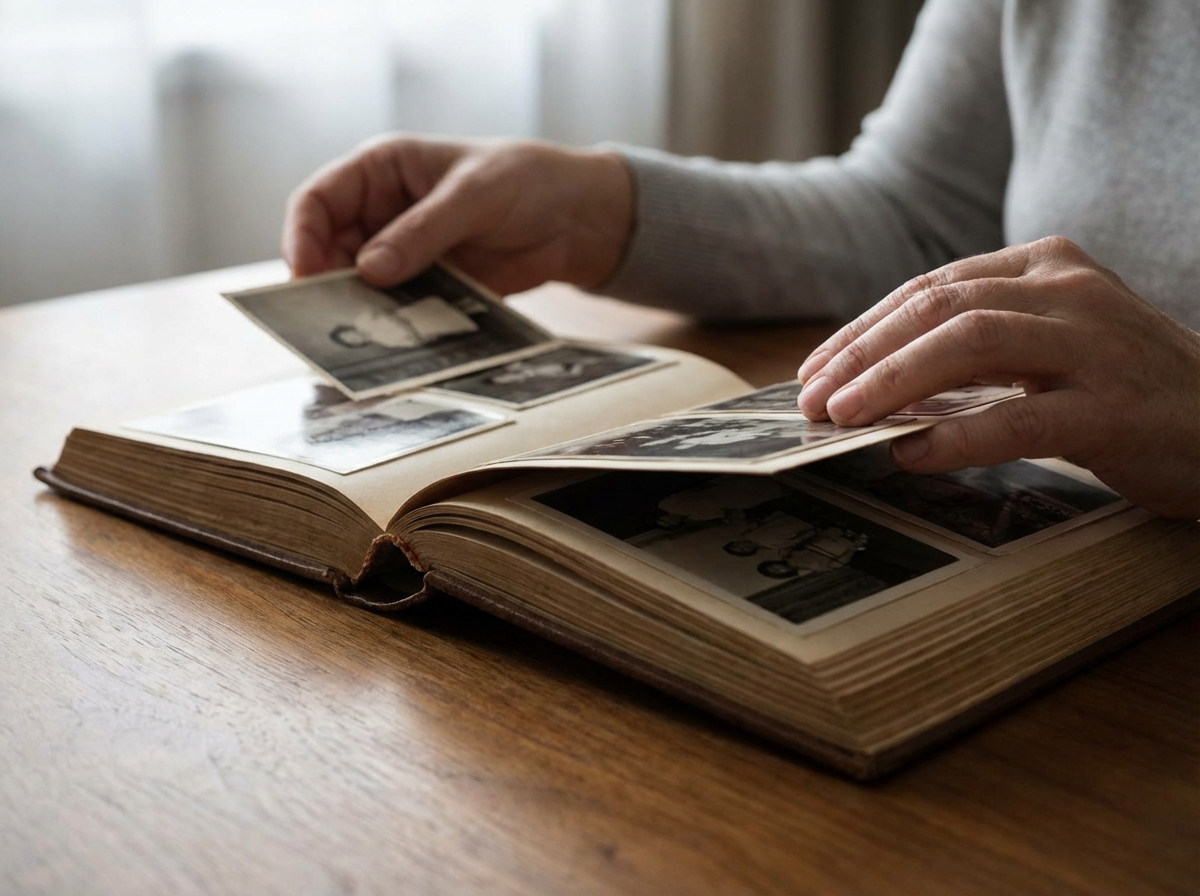
For most people, the school years are the sharpest-kept part of their memory. Names of classmates they have not seen in sixty years, the smell of the classroom, the teacher nobody forgot. Questions about school and friendships reach memories that are unusually detailed, which makes this the best subject to open a first conversation with.
What you'll find here:
- Why school stays vivid even for people who remember little else.
- Questions about primary school, secondary school and friendships.
- How to handle school years that were not happy.
- What to do when names and dates no longer line up.
Why this is the best place to start
Memories from childhood and early youth are usually the most firmly anchored. That makes this subject ideal to open with: it takes little effort, it almost always produces something, and it gives the storyteller an immediate sense that there is in fact plenty to tell.
There is also a picture of a period in it. Classes of forty children, walking to school in all weathers, the one school trip a year. That is history no book records the way they lived it.
Start in 5 minutes
- Pick one school period, for example primary school.
- Choose 3 questions you could not answer yourself.
- Put an old school photo on the table if you have one; it works better than any question.
Start here: 3 questions to break the ice
- How did you get to school, and who did you walk or cycle with?
- Who was your first teacher?
- Where did you sit in the classroom, and next to whom?
How to keep it a conversation
Start with the route, not the report card
The walk to school, the playground and lunchtime produce far more than questions about grades. It is the everyday things that stayed sharpest.
Use photographs and objects
A class photograph is the single most powerful tool for this subject. Names that would not come back often surface the moment someone sees the face.
Allow the detours
A question about school almost always leads somewhere else: the family, the neighbourhood, the war, a first crush. Follow it. The best stories are rarely where you went looking for them.
Keep it from turning into an interview
We build a question plan around the time and place your parent grew up in, and write follow-up questions based on what was actually said. See how it works. See also our guide on interviewing your grandparents.
Questions about primary school
- Where was your school, and what did the building look like?
- How large was your class?
- Which teacher stayed with you most, and why?
- What did you do at break time?
- What did you eat at midday, and where?
- Was there punishment at school? What kind?
- Were you good at something you did not think you were good at?
- What is the most exciting thing that ever happened at school?
- Did you go on school trips? Where to?
Questions about secondary school and after
- Which school did you go to next, and who decided that?
- How did you get there every day?
- Which subject did you love, and which did you hate?
- What did you want to become back then?
- Did you finish school? What happened afterwards?
- Was there a teacher who pushed you in a different direction?
- What did you do after school and in the holidays?
- Were you expected to start working, or to keep studying?
Questions about friendship
- Who was your best friend, and how did you meet?
- What did you do together?
- Is there anyone from back then you are still in touch with?
- Is there a friendship you lost that you miss?
- Who was the funniest person you knew?
- Did you ever have a falling-out that never healed?
- Who came into your life once you were already an adult?
- What do you think makes a friendship last?
When school was not a happy time
Not everyone looks back fondly. Bullying, a teacher who belittled them, a school that did not fit, or a childhood that ended early because of circumstances.
Ask anyway, but signal it first
"Was it a good time for you, or not really?" leaves room for the honest answer without landing you in the middle of something unannounced.
Accept a short answer
If someone does not want to talk about it, that is the answer. Move to another subject and come back later if it feels right.
Record this part too
A life story made only of happy memories reads like a brochure. Our guide on recording family interviews covers capturing the harder fragments well.