

You know those stories you have heard in bits and pieces your whole life? The ones about their first car, where they were when they met, or what the world felt like when they were your age. There is a quiet urgency to hold onto them, but the thought of how to formally interview your grandparents can feel intimidating. You worry it might be awkward, that you will ask the wrong thing, or that the technology will fail. This guide offers a simple, gentle plan to help you replace that anxiety with connection.
What you will learn:
- How to prepare for a warm, natural conversation.
- Ways to make it feel more like a chat than an interview.
- How to navigate sensitive topics and memories with care.
- Simple ways to record their stories so you can cherish them forever.
Quick Start: Your First Conversation in 10 Minutes
Feeling overwhelmed? Do not be. You can get ready for a meaningful conversation in less time than it takes to drink a cup of coffee. This is not about perfection; it is about connection.
- Pick the right time. Choose a time of day when they generally have the most energy and feel relaxed, like mid-morning after breakfast.
- Bring a single photo. Find one old family photograph. It is the perfect, low-pressure way to start a conversation.
- Do a quick test recording. Open the voice recorder app on your phone and record yourself talking for 30 seconds.
- Prepare one easy question. Have one simple, open-ended question about their childhood ready to go.
What You Will Need
You do not need professional equipment. The goal is to be prepared.
- A smartphone for audio recording
- A quiet, comfortable space with no TV or radio on
- A glass of water for you and for them
- One or two old family photos to act as memory joggers
- A short list of 3-5 starter questions
How to Interview Your Grandparents: A Step-by-Step Guide
This process is designed to create a positive, meaningful experience. These grandparents interview tips are about listening, not interrogating.
Step 1: Prepare for a Comfortable Conversation
The environment you create is just as important as the questions you ask. Find a quiet space where you will not be interrupted. Turn off the television and any radios to minimize background noise.
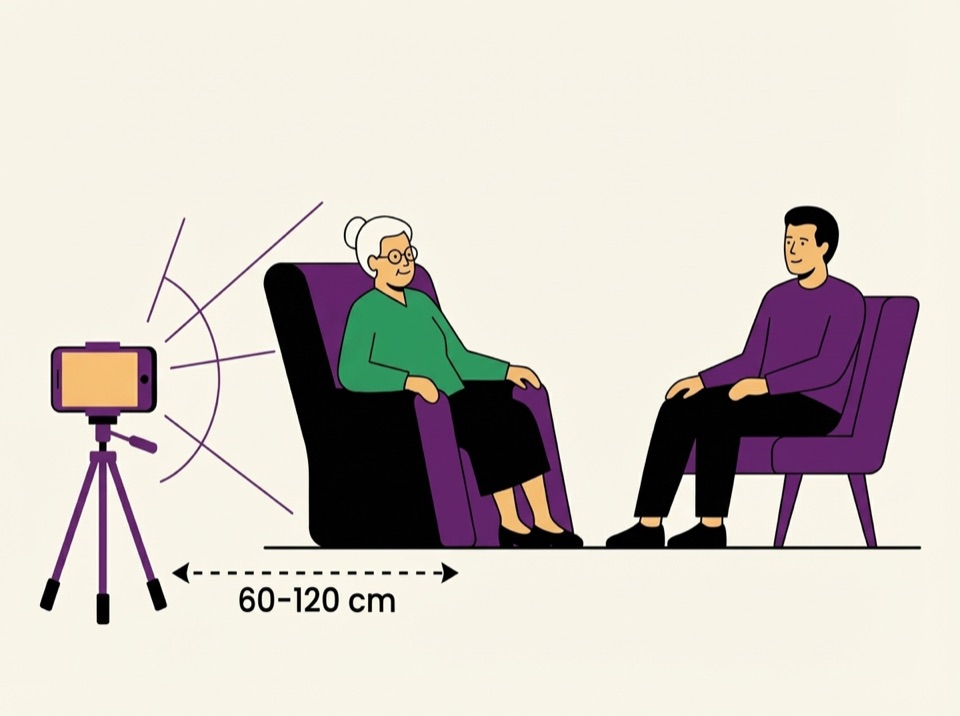
Set up your phone to record without making a big deal out of it. Place it on a table between you, a little closer to them than to you. Putting your phone on Airplane Mode helps prevent interruptions.
Step 2: Open with Warm, Easy Memories
How you begin sets the tone for the entire conversation. Do not jump in with deep or difficult questions. Ease into the past gently.
The photo you brought is your best tool here. Place it on the table and say something simple like, "I have always loved this picture. What do you remember about this?"
Examples of gentle opening questions:
- "Tell me about a favorite family tradition from when you were a kid."
- "What kind of games did you and your friends play?"
- "What was your first job? What do you remember about it?"
Step 3: Listen and Follow the Story Threads
A great conversation is about following their story where it wants to go. Listen for names, places, or feelings that spark your curiosity, then ask a follow-up question.
- "Tell me more about that."
- "What did that feel like?"
- "What happened next?"
- "Who else was there?"
Step 4: Close with Gratitude and Plan for Next Time
End the chat while they are still feeling good. Be specific with your gratitude and plant the seed for a next conversation.
Questions to Ask Your Grandparents
Having a list of questions can feel like a safety net. Treat it as a menu of ideas, not a script.
Recording Tips to Preserve Their Stories
A few simple checks can prevent most recording problems. Your phone's built-in voice recorder is perfectly capable of capturing a clear recording.
For a complete walkthrough on how to avoid common issues, see our guide to recording family interviews. You can find more helpful articles in our complete library of guides.