
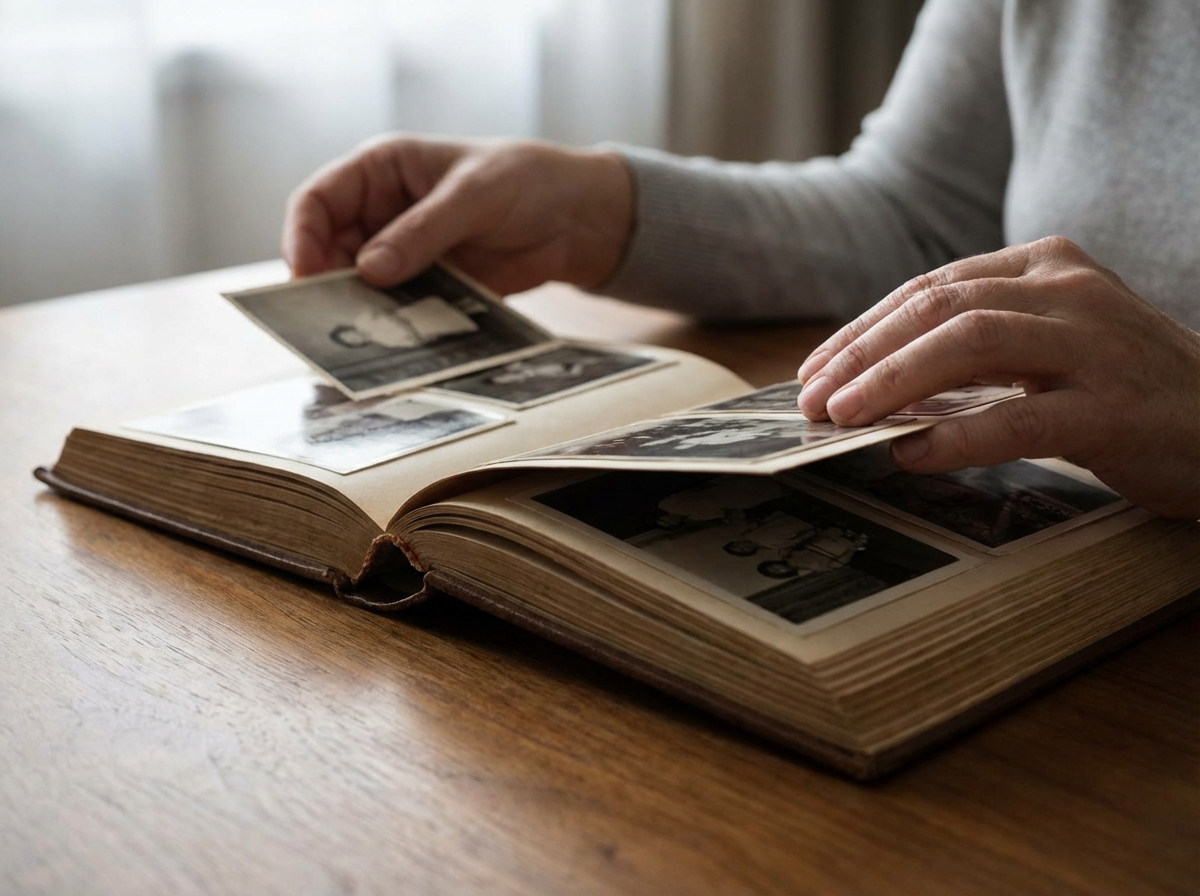
Your parents raised you in a time you never knew, with resources you can barely imagine. No phone to check something quickly, no search engine when in doubt, often no money in reserve. What that was actually like you only hear when you ask — and it almost always turns out different from the version that circulates in the family.
What you'll find here:
- Why children rarely know how their own upbringing felt from the inside.
- Questions about having children, raising them, and letting go.
- How to ask about what went wrong without it becoming an accusation.
- What to do when you are in the story yourself.
Why this conversation gets skipped
Families rarely talk openly about the upbringing itself. The children know what it was like to be raised, and assume that is the whole story. The parents know what it was like to do the raising, and do not volunteer it, because it sits too close to a justification.
So nearly every family is missing half. That your mother lay awake over money, that your father genuinely did not know, that the two of them made a decision somewhere that shaped your entire childhood: you only hear that if you ask.
Start in 5 minutes
- Pick one period: the first baby, the early school years, the teenage years.
- Ask what it was like, not what it was meant to be.
- Make clear you are not there to settle anything, only to know.
Start here: 3 questions to break the ice
- Where were you when you found out I was coming?
- What was the first thing you thought when you saw me?
- How did you land on my name?
How to keep it a conversation
Ask about circumstances, not choices
"Why did you do it that way?" sounds like a charge, even when you do not mean it to. "How did that work then, with work and children?" gets you the same answer without the weight.
Leave room for what was hard
For many people of that generation, parenthood meant little sleep, little money and little help. If you make clear that can be said, it gets said.
Keep your own memory aside for now
You were there, and that makes it harder. Do not correct during the conversation. What you are capturing is how they experienced it; your version can sit alongside it later.
Keep it from turning into an interview
We build a question plan around your family and write new follow-up questions after each conversation, based on what was actually said. See how it works. More background in our guide on interviewing your parents.
Questions about becoming parents
- Did you want children, and how long did it take?
- How did you find out?
- Who did you tell first?
- What did you expect parenthood to be like, and was it?
- What was the birth like, and who was there?
- Where were you living then, and what did that place look like?
- How much money did you have at the time?
- Who helped, and who did not?
- What was the first thing that frightened you?
- What did you know nothing about?
- Who did you ask when you did not know?
- Did your own parents have opinions about it?
- What did you buy first?
- Was there anything you were secretly dreading?
- When did it start to feel normal?
Questions about the early years
- What did an ordinary weekday look like when we were small?
- How did you get through the nights?
- What did we eat, and who cooked it?
- What did you do when one of us was ill?
- Did you work then, and how did you arrange it?
- Who looked after us when you could not?
- What was the first holiday you took with children?
- What could you not afford that you would have liked?
- Which neighbours or friends mattered most in those years?
- What made you laugh, even when you were exhausted?
- Was there anyone you could be honest with about how hard it was?
- What did a good day look like?
- What did you look forward to?
- Did you feel like you were doing it well?
- What would have helped you most, looking back?
Questions about raising us
- What did you find hardest about those years?
- What did you worry about that turned out to be nothing?
- And what should you have worried about more?
- Did you deliberately do things differently from your own parents?
- What did you copy from them without meaning to?
- Did the two of you often disagree about how it should be done?
- Who was stricter, and how did that work?
- What did you do when you did not know what to do?
- What rules mattered most to you?
- Which rule did you quietly give up on?
- How did you handle it when one of us was in trouble?
- Was there a moment you were genuinely angry?
- Did you ever apologise to us?
- What did you never tell us at the time?
- Is there something you see differently now?
- What did you enjoy most about that period?
- When did you feel proudest of us?
- What did you find hardest to watch?
- How did you decide about school?
- What did you hope we would become?
Questions about us as children
- What was I like as a child, honestly?
- How were we alike, and how not at all?
- Was there a moment you thought: that one will be fine?
- What were you proud of without saying so?
- What did I teach you?
- What did you have to laugh at when you were supposed to be strict?
- What do I not know about my own childhood?
- Which of us was most like you?
- Did you worry about one of us more than the others?
- What did we fight about?
- What did we do together that you still think about?
- Was there something you wished we had asked you?
- What do you remember about my first day at school?
- What did I want to be when I grew up?
- What surprised you most about how we turned out?
Questions about family life and traditions
- What did Sundays look like in our house?
- Which holidays mattered most, and why?
- What tradition came from your side of the family?
- Which one did you start yourselves?
- Who came to visit, and how often?
- What was the house like when it was full?
- What did you always do at birthdays?
- Was there music in the house?
- What was talked about at the table, and what never was?
- Which relatives were close, and which drifted?
- Was there a family row that lasted?
- Who was the one everyone turned to?
- What did you keep from your parents' house?
- Which object in this house has a story?
- What do you hope stays in the family?
Questions about letting go
- What was it like when the first one left home?
- What did you miss straight away, and what not at all?
- How did your relationship with us change once we were adults?
- Was there something you still wanted to say while you could?
- What was it like to see us become parents?
- How is being a grandparent different from being a parent?
- What do you do differently with grandchildren?
- What do you hope your grandchildren remember about you?
- What would you tell a young parent today?
- What do you know now that would have helped you then?
- Are you still worried about any of us?
- What are you most relieved about?
Looking back
- If you had it to do again, what would you keep exactly the same?
- And what would you change?
- What was the best decision you made as a parent?
- What did parenthood cost you?
- What did it give you that nothing else could have?
- Did you ever feel you had lost yourself in it?
- When did you last feel like someone's child yourself?
- What do you want us to understand about those years?
- Is there anything you would like to say now that you never did?
- What should we tell your great-grandchildren about you?
When you are in the story yourself
This is the one subject where the interviewer is part of the story. That makes it delicate, and for exactly that reason worth doing.
Say up front why you are asking
"I am not trying to pick it apart, I just want to know" takes the tension out before it arrives.
Do not react immediately to what lands
If something comes up that you did not know, or do not remember that way, note it and move on. The conversation is not the place to work it out; afterwards is.
Record it, even when it is uncomfortable
These are the fragments that mean most later, including to people who were not born yet. Our guide on recording family interviews covers how.